Many people in the Warwickshire area struggle with neck and shoulder pain, especially if they sit at a desk for most of the day. The problem is that we weren’t designed to sit all day and our necks and shoulders are starting to let us know.
If you have shoulder pain from desk work, you’re not alone. In this article we will explain why shoulder and neck pain is occurring and what you can practically do to improve it.
Why Shoulder Pain Happens with Desk Work
Shoulder pain from desk work is one of the most common issues we see, and it’s rarely caused by the shoulder alone.
The act of sitting with you arms in front of you on a desk, or keyboard creates various challenges for your body. Over time, your body adapts to that position and starts to complain.
Creating these common presentations:
- Your head moving forward of your shoulders
- Your shoulders rounding, to accommodate the new head position.
- A shortening of your hip flexors, flattening your lower back and creating stiffness.
Over time, the muscles at the front of your neck and in your chest adapt to this position, shortening the muscles. Often clients come in saying they have pain and “knots” in the back of the shoulders, and a stiff neck.
This isn’t just about “poor posture” it’s about how your body is adapting to your desk position day in, day out.
Why Stretching / Massage Isn’t Fixing It
One of the most common things people try for shoulder pain is stretching, or a massage of the “tight” areas at the back of the neck and shoulders.
And while stretching and massage can feel good temporarily, it often doesn’t solve the problem.
That’s because the muscles that feel tight, aren’t necessarily the ones that you need to loosen. The muscles at the back of the neck and shoulders feel tight because they are being stretched. This picture shows what is happening.
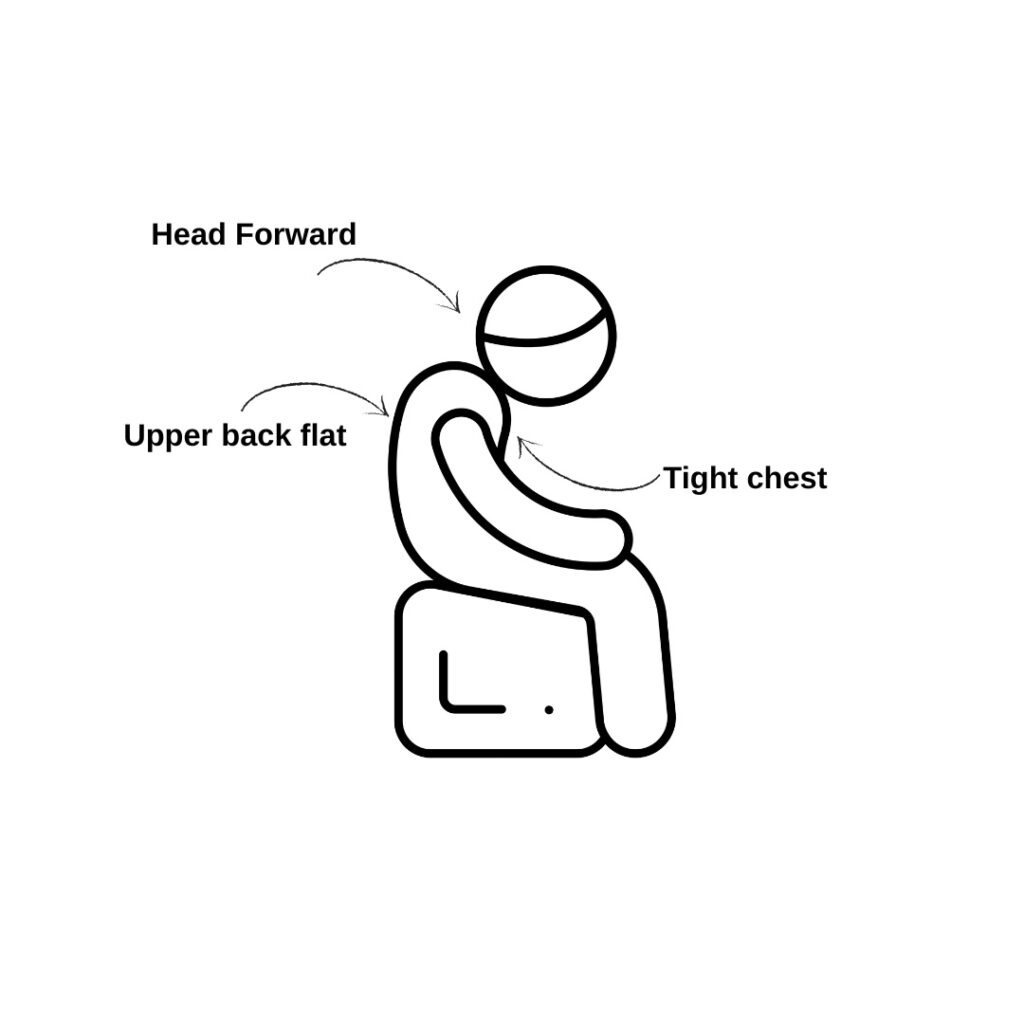
- When the head moves forward, the muscles at the back of the neck are placed under a constant stretch, which is why they feel tight.
- The pec muscles of the chest are tight, dragging the shoulders forwards.
- So the upper back is stretched and feels tight.
How to Fix Shoulder Pain from Desk Work
In order to reverse the posture above and therefore give long term pain, we need a mix of targeted loosenign and strengthening.
1. The Front of the shoulder
The first place to start is at the front of the shoulder with the Pec muscles. We need to loosen these, either by stretching or massage.
2. The front of the neck
Next the muscles at the front of the neck, the Sternocleidomastoid and Scalene muscles need to be stretched, or loosened via hands on massage.
3. Strengthening
This isn’t just about general strength, it’s about retraining the correct muscles to support your posture.The stretching helps give temporary relief, but to solve the problem, you need to strengthen the muscles at the back of the neck and shoulders.
This helps return them to the correct length and gives them the strength to stay there, even when you are at your desk.
Signs it is time to fix your shoulder and neck pain
Many of us can cope with poor posture for many years, but once you start noticing these symptoms, it is time to get it looked at:
- Headaches, especially after a day at the desk.
- Numbness appearing in the hands.
- A feeling of constant tightness despite stretching.
- Pain that doesn’t go away after movement / stretching.
These are all signs that the body is starting to struggle with your desk posture.
How to Fix It Properly
By coming in to take get assessed we can see why you have pain, we can also check your nerves and muscle strength, so the exercises we give will work quickly.
This usually involves:
Improving Strength
Resistance Bands are a great way to improve the strength of the upper back. Grab a band, stand against the wall (to ensure you are upright) and pull the band apart. Keep elbows straight and your head and shoulders touching the wall.
Restoring Muscle Balance
The neck position is incredibly important, our heads are heavy, so our shoulders and lower back have to adapt to a head moving forward, otherwise we would fall over. Strengthening the back of the neck is the answer and exercises such as the “prone cobra” are very useful here.
Changing How You Use Your Body
Small changes to your desk and can make a big difference over time and we are able to come and help your workforce with this with our Physio at work service if you need.
Take the Next Step
If you’re dealing with ongoing shoulder pain from desk work, the key is understanding why it’s happening. Take a look at out shoulder treatment options here.
If you run a business and find your staff are regularly struggling with this issue, we offer a Physio at work service, where we come to your premises weekly or monthly to assess and treat, saving you lost man hours from staff off sick.
Frequently Asked Questions
Why do my shoulders hurt when I sit at a desk?
Because of the strain being placed on your muscles over time, particularly around the neck and upper back.
Why doesn’t stretching fix shoulder pain?
Because the issue is often muscle imbalance, not just tightness. Strength training is always needed to permanently solve these issues.
Can posture cause shoulder pain?
Yes, posture simply refers to how the body is positioned and the effect of that position on the muscles. If the posture irritates the muscles, changing the posture will help the pain.
Is shoulder pain from desk work common?
Very common, especially in people who spend long hours sitting or working on a computer.
Take a look at our video on this area and showing you how to strengthen .
If your shoulder or neck pain isn’t improving, it’s time to look at why it’s happening, not just treat the symptoms. Book an assessment and we’ll guide you through exactly what needs to change.