Knee pain is very common, and many people will have heard the following messages:
“It’s just your age.”
“It’s wear and tear.”
“You’ll have to slow down.”
These are comments we hear regularly in clinic, and they are rarely true.
Yes, osteoarthritis becomes more common as we get older. But knee pain is very rarely caused by age alone.
The knee is highly dependent on:
- The muscles of the thigh and lower leg
- The joints above it (the hips)
- The joints below it (the feet and ankles)
More often than not, pain is due to one of these factors. Osteoarthritis may be the end result of this, but is rarely the cause. As a result, knee pain is highly fixable, with the correct input.
Why Do Knees Start Hurting?
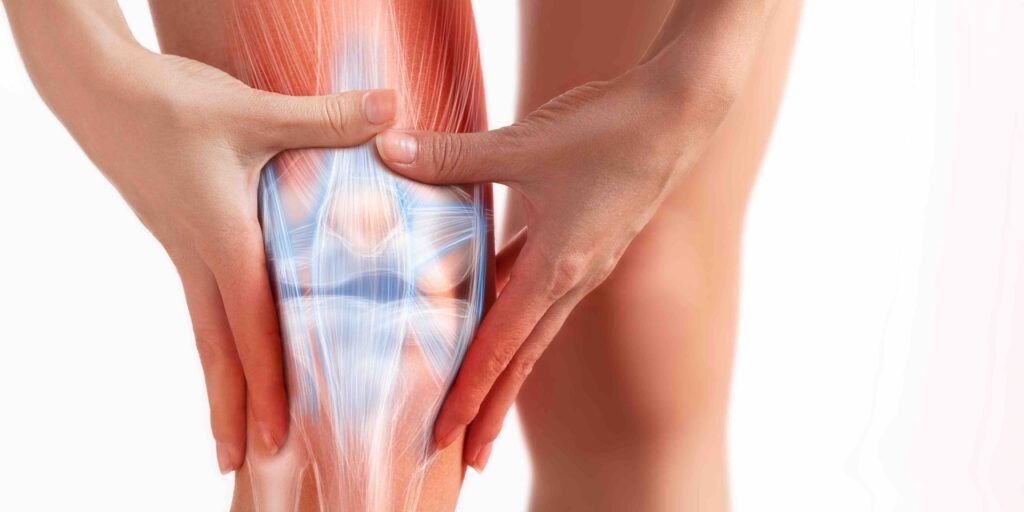
The knee itself is a relatively simple joint. It is known as a hinge joint, and at its most basic level, it bends and straightens.
What really matters, however, are the forces acting on the knee, and those forces usually start at the feet.
When your foot hits the floor it generates a force on the ground, the ground pushes back with an equal and opposite force. That force travels up through your foot, ankle, knee and hip.
In an ideal world, this force would pass centrally through the knee joint, which is how the knee is designed to tolerate the load.
However, many people today have:
- Weak foot muscles.
- Fallen arches.
- Reduced control through the ankle.
When this happens, the foot rolls inwards as it hits the ground, a movement known as pronation or commonly referred to as flat feet.
As the foot drops inwards, the knee often follows, causing the knee to fall inwards too. This shifts forces away from the centre of the joint and causes it to run through the inside of the knee instead, a common cause of knee pain.
This is when people start to notice:
- Knee pain going downstairs.
- Discomfort getting up from low chairs.
- Stiffness after sitting.
- Swelling after longer walks.
It often feels sudden, but in reality, it has usually been developing quietly for months or even years.
Common Causes of Knee Pain We See in Clinic
At The Reinge Clinic, the most common knee problems we assess include:
- Patello-femoral pain (pain at the front of the knee).
- Early osteoarthritis.
- IT Band pain.
What links all of these conditions is poor biomechanics, either muscle imbalance, altered movement patterns, or how load travels up through the foot and leg.
If this sounds familiar, a thorough assessment allows us to identify the root cause of your knee pain and work with you to correct it.
Let’s Talk About Osteoarthritis
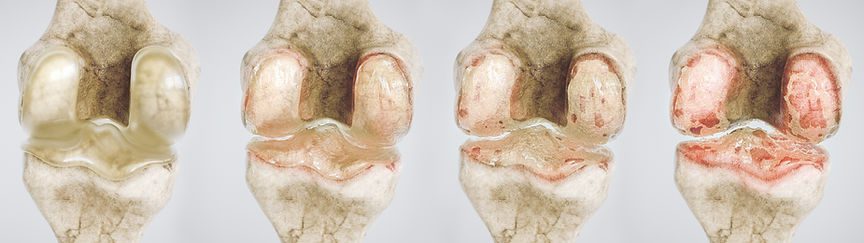
Osteoarthritis (OA) is often described as “wear and tear”, which makes it sound like it is unfixable, however, in reality, OA simply means there have been changes to the joint surfaces over time. The more important question is: Why have these changes occurred?
It is true that as we age, the cartilage that protects our joints becomes thinner and more vulnerable. However, cartilage damage usually occurs because the knee has been loaded in a poor position for many years.
When the cartilage is thicker, it can tolerate this. As it thins, it becomes less forgiving and pain begins to appear.
This is why we see more knee pain and osteoarthritis as people get older, but age itself is not the cause.
Important things to understand:
- Many people have osteoarthritis visible on scans but no pain.
- Movement is essential for arthritic knees.
- Strengthening muscles is the main defence against Osteoarthritis
- Staying active slows progression.
We regularly see people in their 50s, 60s and 70s who assume Osteoarthritis means the end of walking holidays or golf. In reality, some targeted strengthening work can alter how the forces run through the knee and remove pain in the vast majority of people.
What Actually Helps Knee Pain?
Knee pain is often simple to improve.
1. Understanding Your Movement
Assessing your knees, feet and pelvis allows us to understand why your knee is hurting. Watching you walk, sit and balance tells us what the forces are doing and where your weaknesses are.
2. Building Strength
The muscles of the foot and around the knee, ultimately support the position of the knee. Strength is always needed to solve knee pain.
This is especially important for those with early osteoarthritis. In early Osteoarthritis, we can realign the knee and forces that accompany it, and often completely resolve your knee pain.
3. Supporting the Knee When Appropriate
The world of bracing and support has moved on significantly in recent years.
Modern knee braces can now:
- Alter how forces pass through the knee.
- Reduce pain with walking and exercise.
- Allow strengthening work to be done comfortably.
Used alongside targeted strengthening, specialist bracing can be extremely effective for early to mid-stage arthritis and many other knee conditions.
When Should You Seek Help?
Ideally, the earlier you seek help, the better.
The sooner we assess the issue, the quicker we can put the right strength and movement work in place. Problems are always easier to fix at an earlier stage.
Consider an assessment if:
- Pain has lasted more than 2 weeks.
- You avoid stairs.
- Your walking distance is reducing.
Knee Pain Is Common, but not inevitable.
If you’re based in Kenilworth, Warwick, Leamington Spa or the surrounding Warwickshire area and struggling with knee pain, it’s worth getting an assessment to understand what is really going on.
In many cases, small changes in strength, movement and load management make a significant difference.
If you’d like a clearer understanding of your knee pain, you can book a structured knee assessment at The Reinge Clinic.